Just Free Your Hands, and the Rest Will Follow

How do you write?

Long-hand with a pen and paper? Typing on your laptop? Or via a voice-activation program?

As you may know, I should write exclusively via voice-activation, but I don’t. For me, there are varying levels of pain with the different modes of writing. Typing on the keyboard at my previous 80-words-a-minute is out of the question. I can usually handle pen and paper for maybe a page or two, “hunting and pecking” with a pen gripped in my fist for a little longer. I can generally scribble in the margins for big-picture edits without too much problem, and I can dictate by microphone for as long as my throat can handle. (And yes, there is such a thing as RSI of the throat muscles!)

Why do I switch between modes when it is healthiest for me to write by “voice”? Because being a writer involves wearing many hats, and certain modes seem better suited for certain functions. For example, my voice-activation program, Dragon NaturallySpeaking, is least effective when I am editing. Dragon works best when I speak in complete sentences, as it uses context to help figure out what I said. Can’t use complete sentences in revising, unfortunately. It’s all about “select this” and “delete that” and “insert here.” Now don’t get me wrong – I love Dragon, I couldn’t be a writer without Dragon – but I kinda want to throw my computer out the window when it misunderstands me for the gazillionth time. So I am willing to endure a little pain when I am editing, since it boosts my writing productivity, not to mention my mental health.

On the other hand, when I am drafting, Dragon is a godsend. Not only does it allow me to produce a large quantity of words, but it also encourages me to let go of my internal editor and let the imaginative storyteller take over. A study referenced in Livia Blackburne’s blog observes that long-hand writers may be more systematic than computer writers, perhaps because it is more difficult to make changes on paper. http://blog.liviablackburne.com/2011/01/typing-vs-longhand-does-it-affect-your.html. I think the flip side is also true: computer writers may be less constrained than paper writers. When you are writing on a computer, there is the sense that you can always revise, giving you the freedom to write that crappy first draft. This feeling is essential for silencing the internal editor.

I would venture to say that writing by voice is even less constraining than typing. What, after all, feels more casual than kicking back on a recliner and speaking into a headset? You might as well be chatting with your best friend.

Loni-Mermaid’s month-long Healthy Writing challenge kicked off yesterday. Awesomeness that she is, she set up five 1K1H (one thousand words in one hour) challenges in the first day. I was only able to participate in three of them, but I came up with 4,235 first-draft words. In three hours. When the time came, I just plugged in my microphone and let the words fly. And frankly, I’m not sure I would have been able to do that with my former 80-words-a-minute typing hands.

A large part of me feels that writing is writing, no matter what the mode. But for those of you who have never tried voice-activation, why not? I think we would all agree that something feels different about each mode of writing, whether or not it’s true. Sometimes, a simple change – whether it be scenery or time of writing – is all we need to revitalize our words. If you haven’t already, I encourage you to add this new way of writing to your repertoire. It may actually be the tool that will break you out of your next writer’s slump.

Do you have a preferred method of writing? What is it? What do you like about it? How does it feel different from other forms of writing?

VANWAES, L., & SCHELLENS, P. (2003). Writing profiles: the effect of the writing mode on pausing and revision patterns of experienced writers Journal of Pragmatics, 35 (6), 829-853 DOI: 10.1016/S0378-2166(02)00121-2


Somewhere in Time

I am blogging today about an author who died a few days ago. She was African American, and a writer whom I admired for her success as an author, her years in the business, many things, but mostly because she was also just too cool for words — but I’m going to give it a try by jotting down a few thoughts about her as they come to me.

Two years ago, Leslie E. Banks and I hung out over a weekend in October at an event called Phauxcon, a pop culture fan event created more than 10 years ago by my good friend Sierra Hurtt. Don’t ask me how Sierra manages to convince luminaries like LA Banks (Vampire Huntress series) and Jim Butcher (another dinner guest a year earlier) to join a group of no more than 20 folks to talk paranormal fiction, urban fantasy, gaming, role-playing, sci-fi television, Spike and Buffy, or you name it. But she does.

Well, on that first night LA, Sierra and I went out to dinner and had a great time, and then we spent the next two days, talking and laughing and sharing our experiences and ideas on books, careers, writing, comics, you name it. We were  joined by another 15 or so attendees over the weekend, and just had a grand time.

LA told us about her roots as a writer, how she lost use of her full name (Leslie Esdaile Banks) in a contract dispute, what motivated her to write, and what the essence of her stories sought to convey, and she spoke lovingly of her daughter. In all, we chatted like old friends for three days. So as you can tell she was generous with her time, and herself, just like so many other writers, editors and even agents I’ve met in this realm of publishing.

So much giving in such a competitive industry is surprising, and only something I think can happen in one dominated by women (yes, I do believe that, but that’s another blog).

Continue reading

The Writer’s Epitaph? Suck it Up, Lest Ye Be Judged

I’ve been thinking about how we take criticism.  We all get treated to other people’s judgments, deserved or not.  Sometimes we ask for a critique.  Other times we don’t – and we get it anyway!

I’ve been seeing a lot of postings on the Net about critiques and what people consider harsh reviews.  There was the episode, earlier this year, of the writer who committed review-icide over what she thought was unusually harsh criticism in a blog.  Which touched off a firestorm of argument over three days and forced the entire discussion to be closed.

Mostly, writers post more gently, asking the usual why?  Why me?  Why this work?  What do they not get about my writing?  And, since I’ve recently enrolled myself in a website for receiving advance copies of books, and another website where I can post my thoughts on them, I have to consider how a book gets reviewed.  What’s fair?  What isn’t?

Even more important, how would I want MY book to be reviewed, when that happy day arrives?  What does my writing say about me, since a person’s writing is inevitably a window on the writer?  What do I want it to say?

What will your writing say about you?  And how do you want to be remembered for your work?

Which brings the ultimate question:  What is your writer’s epitaph?


(PS:  The title for this blog post is the three titles hammered out on my weekend trip to Vermont.  If I can’t decide, why not use all three?)

How My Obsession with the Not-so-Impecunious Robert Pattinson Has Made Me a Better Reader (and therefore a better writer!)

My age is swirling around in a little filter-like funnel cloud above me right now reminding me that at thirty-six, I am a grown woman and no longer a Bop reading young girl.  I should not be obsessed with teen idols. 

Okay, now that I’ve gotten that out, let me say it…who cares?  He’s cute and interesting.  No biggie.

But I do want to give credit where it is due and so here is why I feel compelled to admit to you all what my brain does when I find something or someone fascinating.  It goes into absolute devouring mode. 

I’ve been like this as long as I can remember.  At ten, I fell in love with Sal Mineo’s Plato and read Susan Braudy’s 320 page Who Killed Sal Mineo?

Can obsession really be that bad if it’s motivated me to become an avid reader? 

Here’s what I know.  Today I read a page in Guy de Maupassant’s novel, Bel Ami, where I stumbled over a word I was unfamiliar with.  Impecunious.   Had to look it up.  Turns out it means penniless. 

Have you ever heard that phrase, “There’s what you know.  Then there’s what you don’t know.  And then there’s what you don’t even know you don’t know?” 

Well, today the obsession that sometimes leaves me questioning my own sanity knocked a little piece out of that “what you don’t know” stuff. 

Today, this blog is a spin zone.  I’m inviting you to come out and 1) admit your own guilty obsession and 2) explain (fabricate) how it has made you a better person! 


My Robert Pattinson Reading List:

Twilight, Midnight Sun, New Moon, Eclipse, Breaking Dawn and The Short Second Life of Bree Tanner by Stephenie Meyer.  Water for Elephants by Sara Gruen.  Bel-Ami by Guy de Maupassant.   Cosmopolis by Don DeLillo.  Doomed Love by Virgil. The Ballad of the Sad Café by Carson McCullers.  Maniac Eyeball by Salvador Dali & Andre Parinaud.  The Bad Mother’s Handbook by Kate Long.

Ain’t Nobody Gonna Mess With My Nora Roberts!

The Setting: A Barnes & Noble in Southwestern Pennsylvania
The Characters (emphasis on characters): Me, My Mom & My Dad Driving the Getaway Car 

I attended my first RWA Nationals this past June in New York City. Many, many things stood out to me but one thing that really caught my attention was the use of Nora Roberts. Nora was mentioned in almost every workshop I attended. People brought her name up at lunches and dinners. She was quoted left and right.

Annoying? Hardly. I know you all say you’re Nora’s biggest fan. But you are not. I hold that title and here is why.

About seven years ago, I was visiting my Mom and Dad in Pennsylvania. As with most visits to my parents’, we ended the night at a Barnes & Noble. If we’re in a Barnes & Noble, my Mom and I are in the romance section. And if we’re in the romance section, you know we’re checking the Nora Roberts section within the romance section … on the off-chance we haven’t read every title.

We have.

What should we find on this particular night? The Nora books were NOT in order. They weren’t even alphabetical. No, they were just sitting there all willy-nilly. Trilogies weren’t shelved together. The Stanislaski’s were miles apart. The O’Hurley Triplets were practically in different zip codes. And do not even get me started on how Cameron, Ethan and Phillip Quinn from the Chesapeake Bay series were placed between various single titles.

For two people who discuss Nora characters more often than some of our relatives, this is NOT okay. In fact, I dare say it was disrespectful.

So we did what any fan of Nora would do. We took every book off the shelf and re-shelved the entire section the way we felt it should have been. The way a reader needs to experience Nora.

Now don’t get your panties in a bunch. We did mankind a favor. Just think of the poor virgin Nora reader who could have possibly gone into that store and picked up Amanda Calhoun’s book and read it before knowing what happened in her sister C.C.’s book. What the hell kind of world is that? Certainly not one that I want to live in.

Of course, halfway through this little escapade my Mom and I looked at each other and just lost it. That’s right, in case the massive mounds of books all over the floor weren’t telling enough, my Mother and I were cackling like crazy people (or “laughing like loons” as Nora always says) in the middle of Barnes & Noble while my poor Dad just rolled his eyes and went on to buy a Venti Caramel Macchiato from the in-store Starbucks and pretended not to know us.

So take that supposed fans of Nora. While I may never be a speaker at RWA Nationals, I feel better having shared my story with you.

And yes, I fully intend to smile pretty when the cops show up with my restraining order about two hours after I post this. Viva la Nora!

A Place To Write

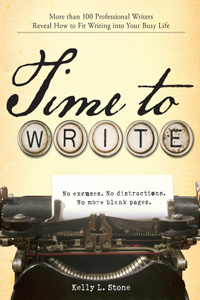
You may remember that back on June 6  I posted about my task to get back on track with my writing and to start putting together a do-able schedule to ensure that I could have time to write and to balance my other duties as a wife, mother, attorney and friend.  So, I read this book:

It was enlightening and helped me focus on my writing style and a realistic set of goals for myself.  I’m an “after-hours/any time opportunity” writer – meaning that I write when everyone else is down for the night and also when I can snatch time during the day. So, I’ve a whole new set of goals and a schedule posted on the fridge and it appears to be working. I’ve met and exceeded my daily word count of 1000 words for the past two weeks and it feels great!

So, the next thing I need to tackle is where I write. Right now it is anywhere I can grab a quiet place and take the laptop.  Usually that’s the sofa in the sitting area in my master suite or down in the “grown-up” living room. But, my husband pointed out that I need a dedicated space where I can go and know that it’s “writing time” – what a guy, right? (Actually, he said, “I’m tired of watching you wander around the house like a homeless Stephen King.”)

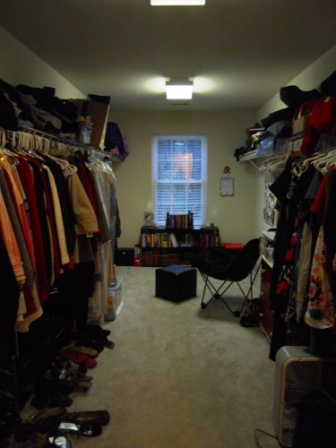
So, we have new project – Operation Bestseller (catchy, huh?).  We’ve identified the location and what we need to do get there.  Here’s the location:

That’s my closet. It is 19 feet long –  yep, you read that right. It is the result of adding a third bay to the garage when we built the house and the last 8 feet is going to my new writing space. It will have a small lounge chair, bookshelves and PRIVACY. Aaahhh . . .

And – here is the change:

A closer view. I opted not to have a desk – it felt too much like being on the day job.

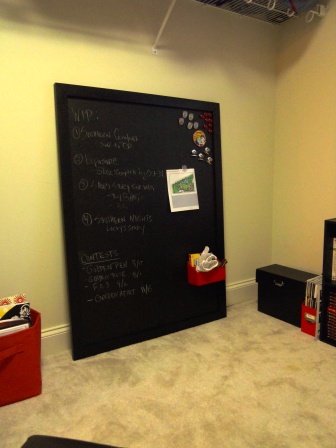
I track contests, deadlines and plots on this board:

My wall of inspiration:

Inspiration up close:

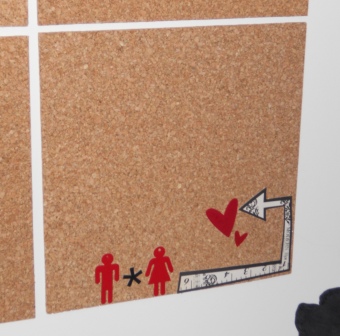
I made this – isn’t it cute?

I already need another bookshelf. These are black cubicles from Target.

Part of my Harlequin Blaze collection:

I can feel the creative juices flowing just thinking about it! It so quiet and secluded and I can go in there and focus – What. A. Concept.

Where do you write? Do you have a special place?

Robin

Sex, Sex and More Sex

I love Tina Fey.

(I know, probably not the first words you expect when reading a blog titled Sex, Sex and More Sex, but I swear it fits in.)

In her movie Date Night there is a scene at the beginning when she comes to bed wearing a ratty old T-shirt and her retainer. Her husband (the adorable Steve Carell) looks at her and says, “I guess were not having sex tonight.” This leads to a discussion of whether they can rally, i.e. change their mindset and get up the energy for sex.

This scene made me laugh out loud. Not because it’s a situation my characters Claire Layton and Jake Warrick encounter in Up a Dry Creek. No way. Those two are so attracted to each other they have to practically sit on their hands not to touch each other. However, as the chronicler of their story, I had to rally a time or two to get in the mood to write hot sex scenes. Face it, even we writers get headaches.

So what do I do to rally? How do I get in the mood to write a sex scene?

Music. I break out the old school Prince. Slow Love is at the top of my list for great songs to write sex to, along with AdoreSoft and Wet and When You Were Mine. Some sample lyrics from Slow Love, “U can see through race car drivers / Let me show U what I’m made of / Tonight is the night 4 making slow love.” The man cannot spell to save his life, but oh can he write a damn good rally song.

No Distractions. Most of the time my house is a zoo with animals, children and a husband wandering through my office (I swear one of these days I’m putting in a door.). This is not conducive to writing a love scene. So I save them for mid-afternoon when everyone has wondered away or late at night when they’re all sacked out.

Motivation. Not my motivation, the characters. In Up a Dry Creek, Claire and Jake are attracted to each other from the get-go, but when they finally make love it’s not just about sex. It’s about that connection they have forged with each other that is expressed through what their bodies do together. Like in real life, plain sex is good but emotionally-charged sex is amazing.

A glass of wine and a back rub sure help too, but those are my top three requirements for writing a sex scene. I’m tempted to say a visit from Mark Wahlberg (who plays the hot security expert in Date Night) would help, but I can’t imagine I’d have any energy left over to type. 🙂

Opening Salvo

My boyfriend Joe (whom some of you may know as The Fairy GodBoyfriend) and I were talking in the car Saturday morning on the way home from the Adam Ezra concert in Lancaster, PA. Thanks to a considerable lack of both sleep and caffeine I can’t remember what got us onto the particular subject, but Joe made a comment about how he’s not a real talkative fellow. He’s just not the kind of guy who goes out of his way to introduce himself to everyone at the party. And there’s nothing wrong with that.

Like everything men say, Joe’s statement is true…to a point. Joe has no problem talking to strangers. None at all. In fact, he enjoys it. If I ever leave him by himself at a party–or a line at Best Buy–he will inevitably be chatting with the person next to him upon my return. He’s not antisocial; he just doesn’t make the first move.

Joe has two major advantages: 1.) He recognizes and accepts that he is not the kind of guy who makes the opening move and 2.) He has an incredibly dark, sharp, and dry wit. So here’s what Joe does. He stands alone, aloof, watching the world around him. Inevitably something happens, about which Joe makes a fabulously snide comment that would have Lewis Black and Denis Leary fighting for a pen to write down. Someone within earshot hears this comment and laughs. Nine times out of then, this person comments back to Joe.

And lo, the conversation has started.

As I write this now, it occurs to me: I’m not even sure Joe realizes that he does this. It’s just second nature to him. People all over the world wrestle every day with how to start a conversation–whether it’s with the cute girl at the bar, or the electric company representative on the phone. I grew up in a clique of nerds and continue to frequent science fiction conventions like they’re going out of style. I am constantly surrounded by the socially awkward (and I treasure every single one of them). If these folks only knew Joe’s secret! (Many of them do–they’re just not as witty as Joe.)

As writers, some of us struggle with dialogue. What’s the first thing your character says? What is she reacting to? What is he wondering about? Is it something important, or is it just there to move the plot along. Is there more story being told between the lines, or is it just a bunch of lame tagging? (I hate “stage directions”.) Worst of all–is it there at all, or are you just telling us that someone spoke? (Show! Don’t Tell!)

For some of writers, dialogue is second nature. It flows off the tongue like water off a duck’s back. (Granted, those of us usually have issues elsewhere–like with descriptions. Oh, descriptions, how you are the bane of my existence!)

Dialogue is the lifeblood of your story. It tells the reader what your character sounds like–the cadence of his voice, the tone she uses, the slang words, the colloquialisms. Dialogue tells us how your character feels about other characters, and about the world in general. It tells us how your character would react given a certain situation. (Don’t go for the obvious reaction–go crazy! It’s more fun!) Dialogue makes your character allies and enemies. It burns bridges and mends fences. It is–usually–where we fall in love.

I fell in love with Joe, after all.

But every conversation has to start somewhere. What are your opening salvos? What do they say about your character? What’s your favorite snappy bit of dialogue?

FIVE MONTHS UNTIL CHRISTMAS

Deadlines can be disastrous.  August 2 for Congress.  September 1 for School.  December 25 for Naughty or Nice!  No matter what project is at hand, any deadline can be gracefully accomplished, or utter disaster.

I wish this post could be about the Great Debt Ceiling Feud of 2011.  I have plenty to say about that little shootin’ match going on in Washington this week.  But that’s for other blogs.  No, my own personal deadline has been on my mind lately.  You see, I promised myself that I would finish my book this summer.  And I’ve cobbled together all the bits I’ve written on my current WIP into a “master file” document.  It currently stands at 42,000 really messy words.  Am I pleased?  No!

I’m terrified.  And my writing has slowed even more than usual (and I’m not a high-output writer in the first place).  My personal deadline when school let out was to have a 90,000 word rough draft by September 1.  Realization: ain’t gonna happen.  Maybe I should run for Congress!  Wait, I’ve already said that’s a topic for other blogs..  So, I have to accept where I am (not good at that) and reframe my ambition (definitely not good at that!) or abandon the effort altogether (never).

But, as I fussed about this last night, I commented – “I remember when I first started writing full time, I started the day by ‘going to work.’  I wrote from nine until twelve every day.  Then I had lunch, and the afternoon was for the home-improvement projects in the house.”  And that realization, that long-buried memory, was very freeing. I’d had the discipline to write, and I’d been successful at completing a book and seeing it in print.

So today is calmer.  Once I post this, I’ll set a time limit for how long I’ll be at the keyboard today, working on my book.  Once that’s over, I won’t go back.  I won’t dwell.  I’ll certainly think about my writing.  I might scribble some notes.  But I will NOT obsess about that deadline.  It’s history.  I’m not going to make myself sick over it.

So – do you obsess over deadlines?  How do you handle the stress of these demons?  Avoid?  Negotiate?  Reframe?  Or embrace?

And remember:  Christmas is just 5 months away.  Start those shopping lists now!  Every minute counts.


t


Who Is Your Muse?

We as writers are constantly looking for the inspiration, drive and desire to sit down and pump out a story.  Sometimes it flows naturally, (like those 2 am instantly, awake ideas that just have to be jotted down) and other times we sit at our computers staring at the blank screen hoping something will jump out at us.  As a pre-published author I’m not under the gun to perform on deadlines–yet, but I do like to set goals for myself on a specific book.

So what do you do when there is no thoughts running through your head?  What inspires you to write that story? (For my last story, it was a hot picture of Hugh Jackman over my desk). 🙂 LOL.

Yes, I’m suffering lately, but thanks to a good friend of mine, she inspired me the other day to sit and write 1,000 words in one hour on my latest endeavor.  I did 1,069.  Sometimes for me, my Muse is a friend who challenges me for my own gain (no bets, just a challenge to see if I can do it).

Let me know what or who your Muse is that gets you through those ‘blank page days’ and why do we have those days–besides the obvious ‘reality gets in the way’. I would love to hear from my Mermaid Sisters on their ideas and also from others out there joining us today.  Challenge yourself, challenge your writing friends and critique partners to sit and write.  Set achievable goals as life does get in the way. (Would love to hear the results too!)

Hugs and best wishes!