Category Archives: mermaids

Embracing Self-Plagiarism

One of the questions a writer is most-often asked is whether they are a “Plotter” or a “Pantser.” We’ve talked about it here on the Waterworld Mermaids a few times. Do you painstakingly outline things, or do you just fly by the seat of your pants and just write like the wind?

I tell people I’m a Plotter, only because the NaNoWriMo goal continues to elude me. The most I’ve ever been able to write in a month is around 36,000 words. Folks who can “Fast Draft” and do something like 50,000 words in a weekend completely blow my mind. *looks at Denny Mermaid*

Am I a Plotter by the true definition? No. Do I actually write all these things down on notecards and post-its and poster board? Not really. I’ve tried it. Short lists, sure. Bullet points. This sequel I’m working on? I outlined it for the publisher three times. The actually manuscript? Well…it kind of looks like the latest outline…

My online SF writers group came up with a great term I’ve embraced: The Athena Writer. Athena Writers don’t necessarily have to have something on paper before they write it. They could look like they’re napping, or staring off into space after a big dinner, and then once in front of the computer the scene springs, fully-formed, from their minds. This is how I write. I have to have everything figured out in my head before I write a scene down. I don’t feel comfortable writing it if it doesn’t make logical sense.

Let’s be clearer: I don’t feel comfortable typing it into the manuscript if it doesn’t make logical sense.

While writing this new book, I’ve stumbled upon a process that I’m definitely going to try more of. I don’t really have a name for it yet. Maybe you guys can help me out.

I go places while I’m writing a novel; it’s inevitable. The doctor’s office. Job training. Lunch dates. These are places where it’s unlikely I’m going to have enough time to “get in the zone” and spend an hour cranking out 500 beautifully poetic words.

However, like most writers worth their salt, I carry a notebook with me everywhere I go. In whatever time I have, I scribble down things that I know need to be said, or that will happen in the next scene. Doesn’t even have to be full sentences. Key words, bullet points, clever dialogue. In essence, I’m “fast drafting”, but in very short bursts, on paper. And because it’s on paper and not in the Word Document, I feel less like I’m having to go back and redo work I’ve already done.

There may be some people who enjoy redoing work they’ve already done. I’m definitely not one of them.

This way, I feel like I’m cheating. Like I’m copying off someone else’s paper while I massage the details into my own style. Only this time, the paper I’m copying off is my own.

It’s all about the paper. I still love writing longhand. Writing on paper gives me the freedom to write crap,. I can do it short-hand, or in the margins, with picture doodles. Then when I sit down in front of my computer later, I spend less time staring off into oblivion or rummaging through the fridge because I already know what’s supposed to happen next. I’ve written it right there! All I have to do is make it a little more flowery and move the scene along. Next!

In the last week, thanks to some of this on-paper-scene-drafting, I’ve raised my daily word count from 1000 words/day to 2000+. Granted, I’m getting closer to the end of the book and I can see the light at the end of the tunnel. That always helps. But I’m still going to keep it up. They’re not groundbreaking numbers, but to me it makes a world of difference.

I am all for anything that can make the act of Putting my Butt in the Chair less painful.

So does this make me a Plotter? A Pantser? A Fast-Drafter? A Self-Plagiarist? I suppose I’m a little bit of all these things. Not that any of it matters.

My editor doesn’t really give a flying fig about how I get to THE END…just as long as I get there.

Christmas Was All I Wrote

You know when I love writing?   Not when I remember at the last minute that it’s my day to post, and I haven’t started the short story I promised for the fifteenth…  There are lots of days I don’t write.  But I believe I can write, and I know I write well, when I bother to do it.  I especially love writing when I am so convinced I’ve gotten it right that I start crying.

Most of the Mermaids know that I spent a good twenty years out of the writing loop. I’d hung up my keyboard, decided the life wasn’t for me. But, secretly, I was lying.
Because of the one thing I did write:  Christmas letters. Every year, I set myself a deadline and I wrote the absolute best Christmas letter I possibly could write. This was my way of proving to myself that I could write, and write well.

My letters always had a title. They always had a message. I condensed a year of family news into a single page. They were funny. I slaved for funny. But it was the last paragraph that got the most attention.

My letter always ended with one paragraph that hit it home. I didn’t stop writing until I felt the tears rolling down my cheeks because I knew, beyond a shadow of a doubt, that this one paragraph would make the season. I actually got fan mail for my Christmas letters.

I was watching The Natural on ESPN Monday night and was reminded of how I burst into tears at the ending the first time I saw it. That, I told Mr. Headofthehousehold, is what I want with my writing. I want to write like that. Like I wrote in my Christmas letters. But in book length. And then last night, I told him I would write three chapters before school starts, so I can call my book done. At last.

Do you have moments like this? When clarity seems to strike and you have an idea of where you’re supposed to be going? Even if you’re wrong, it seems like the right way to go.

Write it fast. Get it done. And make yourself cry. Because doing less is not an option.

I have until Monday. And this post was late, because (gulp) I was starting another chapter.


Mermaid Vacation


The Mermaids are sad that summer went by so fast,

So we’re taking a week off to make the season last,

Long days, hot nights, playing in the surf and the dunes,

But don’t despair, we’ll be back real soon!

Happy last week of summer to all of our fabulous readers!

See you on September 4th!

Kieran Kramer Interview

Today we are joined by the fabulous, Kieran Kramer. Kieran is a double RITA finalist and a USA Today Best-selling author of light-hearted Regency Historical Romance for St. Martin’s Press. In addition to writing wonderful, fun, engaging stories with memorable characters, Kieran is a former CIA employee, a journalist and an English teacher who enjoys karaoke and has appeared on multiple game shows.

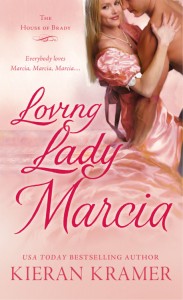
Kieran is well known for her Impossible Bachelor Series and will be releasing Loving Lady Marcia, the first book in the House of Brady Series on August 28th.

I hope everyone enjoys the video interview. Kieran and I had a blast making it despite a few technical glitches – all my fault, of course. To make it easier to view, I’ve divided it up into 6 to 14 minute segments you can see by following the links. Enjoy!


Thank you again for joining us here today, Kieran. You are a joy to be around and I wish you the best of luck with your latest release, Loving Lady Marcia!

The Tell Tale Signs

I recently read an interesting article from two editors that outlined 50 tell tale signs (for them) that a writer is an inexperienced newbie (no, of course I can’t find the article, that would be too easy).  Ironically, the two editors agreed on some of the sins, but differed on others.  That got me thinking about what people consider the greatest missteps committed against writing.  Here are mine:

  1. “Using too many tags and adverbs,” said the frustrated editor frustratingly.
  2. Grammor errors
  3. Switching POV, he though with longing as she felt the depth of his despair at the horrific faux pas.
  4. Wrong! punctuation..?,.
  5. Run on sentences are the bane of an editor’s existence they make them mad.
  6. Gggrr… hiya!.. No conflict
  7. Cringe-worthy metaphors and simile’s are like a set of heaving bosoms pendulously swinging across the engorged seas darkened by the swells of their disastrous union.
  8. “It sucks when these romance writers don’t do their research,” said Candy Cane Johnson as she laced up her corseted gown after flushing the toilet in her 16th century England. 
  9.  Relying on Missouri Senate candidate Todd Akin’s advice that women love rape in romance novels
  10. Vvrroomm… vvrrrooomm.  Here comes the info dump tractor, throwing all its contents on page 1
  11. Wash.  Rinse.  Repeat.  Repeat.  Repeat.  Repeat.  The author uses the same “it” word 2,356 times in one novel.

Those are just a few.  Drop of your pet peeves.

Nine Months and Counting…

I’m having a baby!!  Gotcha! 🙂

No, it’s not a boy or a girl…it’s a book.  (Hopefully not a hard-back! Can you imagine that trying to come out of the birth canal?)

Okay, I know pretty cheesy.  But considering the anxiety and excitement my news has brought to me and my family, one would think it was the same thing.  My ghost romance, Wanted: One Ghost was recently picked up by Crescent Moon Press. The conception took nearly eighteen months but now comes the hard part–the birth for all to see.

A few days ago I realized, I’m counting down the days/weeks and months along with my youngest–no, she’s not expecting (thank God) but she’s starting her senior year in high school.  In approximately nine months, both her and I will have a whole new life spread before us.  We are both nervous and excited.

I think I felt the same emotions when I found out I was pregnant with my first daughter nearly 21 years ago.  Would everything be okay? Was I going to be a good mother? How in the heck was I going to give birth and survive, even though millions of women have been in the same boat since the beginning of time?

I’m not the first to have my book (baby) published (born) and I won’t be the last.  But the preparations needing to go into a healthy delivery are just as important.

A few weeks ago I asked some of my fellow authors who’ve been there/done that/got the t-shirt what they did to prepare for their exciting day of delivery and received some wonderful insight. One friend sent me out to Christine Nolfi’s blog site:

http://christinenolfibooks.blogspot.com/2012/04/pr-basics-for-debut-novelist.html

Another sent me to Nancy J. Cohen’s post about her Promotion Checklist:

http://nancyjcohen.wordpress.com/2012/07/23/promotional-checklist

And others just sent me their own ideas.  All are great words of wisdom and I equated them to the wonderful women friends who’d been in the same boat I had, while I was pregnant with my first in Hawaii.  We look to others who’ve been there before, we want the good, the bad and the ugly truth so we know what to expect when we are expecting, what to prepare for and what to avoid.

That is what I’ve found so refreshing with all of my great writing groups I belong to–everyone is willing to share experiences and even learn from a newbie who might have a nugget or two to share.  And what’s even better, I haven’t met many of the people I’ve talked to face to face and yet they are willing to share so much.

So with that in mind, I am sharing here too.  I want to pass along the great links above (which I felt were very helpful in giving me a sense of where I needed to be and when) and hope to be able to pass the torch to another writer on the verge of giving birth to their newest creation.

If there are any choice words of wisdom to share with me (from those who’ve been there-or those who might have questions) please let me know.  I would love to hear from you all about experiences and expectations.

Hugs!


My Big Fat Lazy Summer

There are so many things I’m supposed to do by the end of this month. I set myself some goals, people!

And here’s what happens when people like myself set goals…

…they don’t happen. I tend to overwhelm myself to such a degree that I end up accomplishing a big fat pile of zilch.

When I went to Nationals this summer, I walked away feeling reenergized (kinda). I walked away with some new information that would make me a more organized writer. I walked away with the tools needed to put my goals into action.
I really just walked (or waddled) away ten pounds heavier. Seriously.

I’m stressed, people! I’m unable to stop putting food in my mouth. I guess part of that I can blame on the lazy days of summer and the fact that I drove cross-country with my five kids who couldn’t gain a pound if they tried. So, yes. I admit that some of my extra poundage can be tossed at the feet of the hotels with free breakfasts. But, on the other hand, where can I toss the remainder of that weight?

This got me thinking yesterday of why I’ve gained the weight. I came to the conclusion that I just don’t care. And that sometimes happens when I feel overwhelmed with big goals.

I’m perfectly well aware that I should stop whining about revising my books and actually revise them. It’s easy to say. It should even be easier now with my organizational strategies and my collection of index cards at the ready. But, part of my problem is that I’ve always sucked at organization—in any way.

When a writing friend tells me that she’s broken down her book into scenes and is working on them one at a time, I’m jealous. I don’t even know how to break my books into scenes that I can organize—either on paper or in my head. I just like to write. I like to create. I don’t like to organize those thoughts. Therein lies my problem.

At home, I eat because it’s better than cleaning out closets. Or organizing the drawers in my kitchen. Or sorting through the mountain of shoes that seems to multiply more than my kids.

And I see a pattern in my writing life as well as my personal life. I don’t like to organize or clean. I don’t know how to structure something into twelve acts or eight acts or put my characters on three-fold boards. I don’t have sticky notes. I don’t have lists. I don’t like to structure the hell out of things because I feel like it zaps all my creativity.

I’ve decided I need one of those life coaches. I need someone to walk around all day with me and grab my hand when I go to pick up the bag of chips. I need someone to take me by that same hand like a child and lead me to a three-fold board and some sticky notes and then tell me how to organize my books.

In the meantime, I’ll probably just continue to buy an ungodly amount of school supplies for my kids. I’ll probably play a little too much Bubble MegaShift on my phone. I’ll play too much Clue with my kids. And I’ll definitely pick up that bag of chips.

I keep hearing everyone give some awesome motivational quotes on this blog, and I’d like to print them out and put them somewhere, but I wouldn’t know where. I don’t even have a writing area. I write at my sticky kitchen table.

So, I’ll leave you with a quote today:
“Deep summer is when laziness finds respectability.”—Sam Keen.

Now, I’m off to find a respectable laziness quote for the fall. And winter. And probably spring, too.

So, what about you? How do organize your life best? Do you find it easier to organize your characters or yourself? Character settings or your own?

Someone, take me by the hand!

Guy Day — International Style

As a writer it is always important to tell a good story, but a large part of that is world building. If you do not portray a
believable backdrop, accurately reflecting the place and culture your characters live in, then it doesn’t matter how great your plot is or how dynamic your characters are… your story will fall flat.

Today is guy day and in honor of all the sexy, diverse men of the world I thought we’d give it a more international twist. I have called on friends throughout the world and they’ve agreed to help by answering a few probing questions about the culture they live in, their daily routines and their views on marriage and family. So let’s give these brave men a round of applause for being so forthright with their answers and see what they have to say.

1.  What would you typically have for breakfast in your country? Lunch? Dinner? Snacks?

Argentina: Breakfast: coffee, tea or mate with milk, toasts or croissants with butter and jelly

Lunch: pasta, beef or fish; salad, potatoes or rice; as dessert fruit or ice cream  Dinner: idem lunch/ Snacks: fries, peanuts, cheese, olives, salami….

Japan: Breakfast: steamed rice, miso-soup, grilled fish, milk

Lunch: pasta, salad

Dinner: steamed rice, soup, fish or meat

Snacks: rice crocker, cakes, etc

The Netherlands: Breakfast: Slices of bread with butter and chocolate sprinkles or with cheese or jam with tea or coffee or milk.

Lunch: Sandwich with butter or cream cheese and thin slices of meat and cheese.

Dinner: Meat and vegetables

Snacks: Fruit, peanuts

Scotland: Breakfast: Toast, cereals, porridge

Lunch: Sandwiches

Dinner: Meat potatoes and vegetables

Snacks: Chips, chocolate, etc.


2.  In your country how is your time usually divided over a typical day? (Work hours, breaks, lunch, dinner, etc.)

Argentina: Work hours: 8 am to 5 pm / Lunch 12 pm to 1 pm / Dinner 9 pm

Japan: 6am – wake up + breakfast

7am -go to work

9am – start work

noon – lunch

1pm – back to work

6pm – go home or have dinner with friend

11pm – go to bed

The Netherlands: Working hours are in general between 8am and 5pm with a coffee break around 10am. Lunch at noon for 30 minutes. Dinner at 6pm and coffee at 8pm. People go to bed between 10pm and midnight.

Scotland: Usual work day approx 8-5 with an hoor fer lunch. Dinner usually aroond 6-7pm and bedtime aroond 11pm-midnight.


3.  What would you typically wear on a workday?

Argentina: Coat and tie or military uniform

Japan: Uniform

The Netherlands: Business suit

Scotland: Depends on yer job.


4.  What would you typically wear on a weekend or holiday?

Argentina: Shirt, jeans and sneakers

Japan: Pants style or Uniqlo wear, casual

The Netherlands: Casual, jeans t-shirt and sneakers

Scotland: Jeans, t-shirts, sweats, etc.


5.  What do you do for fun?

Argentina: I do travel, work out, go to a shopping mall, watch movies or have dinner out.

Japan: Gardening, travel, singing

The Netherlands: Sports activities

Scotland: TV, movies, play and watch sports, pub


6.  What is your favorite sport to watch or play?

Argentina: Professional soccer

Japan: Figure skate, football

The Netherlands: Soccer, field hockey, track

Scotland: Soccer


7.  If you find a woman attractive and you want to take her out, what would you consider a perfect date?

Argentina: A fine dinner at a cozy restaurant.

Japan: Take her out to his familiar bar or restaurant to show she could be special for him. The first date would be a weekday, if it was fun he would make the next date for the weekend.

The Netherlands: Dinner with good conversation and good wine.

Scotland: Dinner, pub or movies, or all 3.


8.  Is it acceptable for a man to date more than one woman at a time? If so, would it also be acceptable for a woman to date more than one man at a time?

Argentina: If they are not married it would be acceptable to date more then one in any case.

Japan: It depends how serious the relationship is for them. If it’s serious, both man and woman would be upset if we found out that the other was dating someone else.

The Netherlands: Yes, if both agree and vice versa.

Scotland: Nae really acceptable although obviously it does happen, both ways.


9.  Is it socially acceptable for a man to date a much younger woman? And would it be acceptable for a woman to date a much younger man?

Argentina: It is more acceptable for a man dating a younger woman than vice versa.

Japan: Yes for man, recently it is getting popular here. Sometimes for woman. Its interesting when woman gets young man, its still negative feeling or jealous among neighbor.

The Netherlands: Yes it is.

Scotland: Definitely more popular for men tae have younger partners and, aye, I’d say it’s acceptable fer both…just rare.


10.  After marriage, what is the general feeling about infidelity in your country? Is it accepted or not? And if it would be considered acceptable for a man to have a mistress, would it be equally acceptable for a woman to have a lover?

Argentina: The general feeling about infidelity after marriage is rejection. It is generally not accepted. It would be almost equally not acceptable to have a woman or a lover.

Japan: Generally ‘not acceptable’ for both, after marriage they believe they need to be faithful but it happens everywhere.

The Netherlands: No, that is not acceptable.

Scotland: Nae


11.  Beyond conception what role does a man typically play in child rearing in your country? Would he actively participate in raising children? (Changing diapers, feeding, taking children to sports or activities, helping with homework, etc.)

Argentina: A man does play an active role in child rearing.

Japan: Changing diapers, taking bath together with children, play with children. Most of the case woman needs to take care of children in all field so man tend to help mothers rather than taking care of child.

The Netherlands: Yes, he will help out with everything in the household.

Scotland: I cannae answer this fae personal experience as I dinnae have any wee uns, but fae what I’ve heard, men play some part in everything nowadays. Apart fae breastfeeding – that just does nae work!


12.  Is it socially acceptable for a man to be a stay-at-home dad in your country?

Argentina: No, not much.

Japan: Some men stay at home with their children or work from home but this is not popular, especially belonging to company. There are many stories of men losing their positions in companies because of working from home or taking leave for a child.

The Netherlands: Yes, if the wife has a fulltime, good paying job he will stay home.

Scotland: Nae sure if I would call it socially acceptable but it does seem tae be happening more.


13.  In your country is it acceptable for a married couple to have independent activities, interests and friends? Or is it more typical to do everything together?

Argentina: It is more typical to do everything together. Although this behavior is lately changing and couples tend to be more independent between each other.

Japan: Of course, yes! If we have child, we tend to do together as family but we also could have own leisure time.

The Netherlands: Everybody does their own thing. Some couple have the same interests and do their sport activities together, others have separate interests.

Scotland: Aye, that’s pretty normal tae have independent interests.

A huge Waterworld Mermaid thank you goes out to all the men who made this interview happen! 🙂


Making Time – What’s Your Score?

What do you do to make the time to get all of the important things done?

Most of the writers I know aren’t only writers, they are moms, wives, aunts, lawyers, teachers, doctors, PR Divas (oh, that’s me:), and a laundry list of other things all of which must get done.

I want to talk about making time, and what tricks, commitments, decisions, we make to do that thing we want to do. And for most of us, that thing, isn’t just one, but many.

Right now, I’m working hard to be organized. But I need help. Seriously. It’s just hard to sit alone and write. I wish I could say it some other way, but the truth is you must be supremely self-motivated and a bit selfish to an extent, to spend such big slices of your life in front of a computer – alone.

Yeah, that’s how I spent the weekend, and yes, I am happy with the results (writing-wise), but I’m also wondering what did I miss. Let’s make a list and see how I scored!

1. Exercise – 0 (made it from the bed to the computer to the terrace to the living room to the kitchen, to the computer – yep, you get the picture – and it ain’t pretty).

2. Reading – 8 (finished the first book of J.R. Ward’s Dagger vampire series – jeez, just give me Wrath for an hour, please).

3. Family – 4 (My son returned from his world travels, and we spoke for a few minutes. I talk to my mom every day, so okay).

4. Friends – 8 (if we count emails and Facebook, I rule.)

5. Writing – 9 (but don’t ask how many words, I’m taking a course on scenes and rewrote a MAJOR scene, which took two freaking days).

6. Bitching – 4 (I’m just counting this post).

So, tell me, how do you writers, authors, who in addition to writing, publishing, marketing, get it all done? Give me the secret! I don’t even have small kids (or a full-time man, husband, etc. to keep happy either), and still I am swamped!

Okay, I don’t want to be too much of a sour puss – I do believe that continuous effort is key. They say no matter what you’ve got to keep writing. So maybe I should be saying, I intend to keep trying to do this writing thing, and other things, better and better, and better.

But I sure wouldn’t mind a tip or two…

PS: Contests are GOLD today. Unpublished writers, The Golden Pen deadline is today! Enter. Great judges…also, The Golden Palm entry deadline is midnight August 15. Put your stuff out there, writers!

Show vs. Tell

Have you ever been told that you are telling rather than showing in your writing?

I think most of us have at one time or another.When someone first pointed this out in my own writing I had no idea what the person was talking about. Today I’m going to try to enlighten anyone not already familiar with this concept.

Basically, think of showing vs. telling as living the experience vs. someone telling you about it. It’s always going to be more powerful if you  give your reader sights, sounds, smells, etc. and really let them know what the experience is like. While I have never been shot at, I can easily imagine it is a lot different to have someone actually shoot at you than to have someone tell you about it. Or, imagine being home alone in the middle of the night and hearing someone break in. If someone tells you about the experience it doesn’t have the same visceral reaction as living it first hand.

Here are two examples to help you see what I’m talking about:

Jasmine was climbing into bed when she heard the sound of glass breaking. She went to the closet and pulled out her pistol then walked down the hall. She rounded the corner, looked into the living room and saw that the cat had knocked over, and broken, a vase.

Or,

Jasmine was climbing into bed when she heard a crash followed by glass shattering. She froze, heart racing, and listened, but the only sound was her own harsh breathing. Swallowing the lump of fear lodged in her throat she rushed to the closet. Standing on tippy-toe she pulled down the black box. With practiced motions she opened the latch and carefully removed the flat black Sig P-225 pistol from its case. She’d never wanted to need this, but now she was thankful that her father had insisted she learn how to use it. She checked the clip, yanked back the slide to chamber the first round and flipped off the safety with her thumb.

Taking a calming breath she stepped into the hallway. The short passage seemed to stretch before her eyes, transforming into something sinister where death loomed around each corner. Like a wraith she crept from one shadow to the next, pausing at each doorway for any sign of danger. Each step ratcheted her anxiety. It felt like a swarm of bees had taken up residence in her stomach and every footfall sounded too loud, echoing through the still house. With shaking hands, she held the pistol out in front of her and whipped around the corner into the living room flipping on the light.

The cat blinked back at her. Deciding she was unimportant, he returned to his bath sitting in the middle of the coffee table surrounded by the shattered remains of the crystal vase her mother had sent for her last birthday.

Exhaling the breath she hadn’t realized she’d been holding, Jasmine lowered the Sig and sagged against the wall. “Damn it Henry, you scared the crap outta me.”

The second example is a lot longer than the first but it also allows the reader to experience more of what the character is experiencing. Another tool I used in the second example is word choice. Using stronger, more descriptive, verbs like crept instead of walk, or shattered instead of broken enhances your writing. Using vivid imagery and adding specific details like pistol vs. Sig P-225 pistol can help a reader better visualize what is happening in the story and allow them to relate to what the characters are experiencing.

I hope this helps any new writers out there to understand the difference between telling your readers what is happening and showing them first hand. Also, maybe it will remind the rest of us to show, not tell! 🙂

Happy writing!