No Room for Doubt

Do you ever spend hours, days, weeks pouring your heart and soul into your writing only to go back, read it and think, “Oh my God, what was I thinking? This is crap. I have no talent. No one will ever want to read this.”

Well, guess what? You’re not the only one!

I love to write. I love the creative process and making the story come alive on the page. For me it is not just the destination (the finished story), but also the journey getting there (developing characters, and hammering all of those twists and turns into place). But I often find, especially during my editing process that doubt creeps in. I start wondering what the heck I’m doing. Wondering why I ever thought that I could write a book.

Recently, while going through one of these moments, a friend introduced me to a new type of encouragement in the form of John Steinbeck.

John Steinbeck? Maybe, the Pulitzer Prize winning The Grapes of Wrath will ring a bell… or Of Mice and Men or East of Eden or The Winter of Our Discontent or Cannery Row

John Steinbeck was awarded the Nobel Prize for literature in 1962, and even he harbored doubts concerning his ability to effectively bring the written word to the page. While working on The Grapes of Wrath, he composed letters and wrote in a journal. Some of this material was later published in Working Days: The Journals of the Grapes of Wrath 1938-1941. Throughout this journal John Steinbeck writes about his struggles, worries and self-doubt.

The following are a few quotes from Working Days: The Journals of the Grapes of Wrath 1938-1941:

June 14, 1938–“Yesterday was a bust. I could have forced the work out but I’d lost the flow of the book and it would have been a weak spot.”

June 18, 1938–“If only I could do this book properly it would be one of the really fine books and a truly American book. But I am assailed with my own ignorance and inability.”

August 1, 1938–“I didn’t work then [July 25] or all week. …Hope to lose some of the frantic quality in my mind now. It’s just like slipping behind at Stanford. Panic sets in. Can’t organize. … I’m jumpy. …Don’t know who will publish my book. Don’t know at all. No reason to let it slide though. Must keep at it. … Wish I could control the jumping jitters though.”

August 30, 1938–“I’m having a hell of a time concentrating with so many things going on. … I hope this book is some good, but I have less and less hope for it.”

September 26,1938–“This book has become a misery to me because of my inadequacy.”

So the next time you doubt yourself, remember, there are other incredibly accomplished authors out there who have also acknowledged uncertainty when it comes to submitting their work. When you start to question yourself just remember:

1. Don’t worry about what anyone else thinks. Your voice is your own and it is unique. Why do we have so many different types of writers? So many different genres? Because there are so many different types of readers!

2. In the words of Nora Roberts, “Write the damn book!” Forget about everything else and just get your ideas down on the page because you can’t edit what doesn’t exist. You can always cast off what doesn’t work later.

3. Trust you instincts. Everyone worries about breaking the rules. Ignore the rules because they are intimidating, and that can lead to insecurity. Instead focus on telling a great story. Once the story is on the page you can obsess over comma usage and dangling participles.

4. Make time for yourself. I know it sounds difficult, and it is, because life gets in the way, but consistently setting time aside for yourself and scheduling around that time will help you to put words on the page.

5. You are not alone. Believe in yourself. Everyone has experienced moments of self-doubt or insecurity, even someone as accomplished as John Steinbeck. If he can do it, so can you… So keep writing!


Why Can’t Weeds Be Flowers?


Looking at life through the eyes of a child, I’ve learned to see the possibility and joy in the small, everyday things.  To search for the magic.  To believe in the magic.  It’s only as we grow older that innocent wonder abandons us.  Or do we abandon the wonder?

I remember my daughter running to me on stubby little legs with a fistful of dandelions.   Her wide smile split her face and pride glimmered in her eyes when she handed me those beautiful flowers.  To me, they were weeds.  To her, a glorious find.   Since I didn’t have the heart to tell her that she’d just handed me a bunch of weeds, I thanked her and put them in a bud vase on the kitchen counter.

But something strange happened.  Every time I washed my dishes or felt the urge to gripe about cleaning the counters, those weeds stopped me cold.  Stored forever in my mind will be my daughter’s smile.  Granted, they weren’t long-stemmed red roses, but they were picked with love and devotion, and that simple act and those simple weeds taught me much about life.

When I told my son years later that dandelions and buttercups and milkweed are just weeds, he looked confused.  He asked my, “Why?” I’m sure I could have googled a bunch of scientific reasoning to back up my words, but, in the end, I ended up disagreeing with my own words. 

I think it’s an important lesson for readers and writers.  We’re meant to turn something average into something extraordinary.  Straw into gold.  Coal into diamonds.  A grain of sand into a pearl.  It’s part of the mystery of life and love and wonder. 

Turning something average into something extraordinary makes me think of my friend Erica O’Rourke’s debut novel Torn, out this month with Kensington.  In it, Mo—quiet, ordinary, unmagical Mo—will have to enter a world of raw magic to avenge her best friend’s murder and to save the world.  Not bad for an ordinary high school girl.  Oh, but the story.  The characters!  I can’t say enough great things about this new young adult book, which won RWA’s Golden Heart in 2010. 

So, what books or movies have captivated you and made you appreciate the average or sometimes overlooked?  Forrest Gump definitely springs to mind.  You can’t get much more average than Forrest…Forrest Gump. 

If you can’t think of a movie or book that takes the average and makes it extraordinary, what about the small, overlooked things that bring a smile to your day?  Like my flowers.  My dandelions.  Because one woman’s weed is another woman’s flower.  I learned that much, at least.  Another thing I learned while researching flowers and weeds is that it truly all depends on WHERE it’s located.  Dandelions on the side of the road are beautiful.  Dandelions in a perfectly manicured front lawn?  Not so much. 

The moral of Kim’s rambling blog today? Plant your ideas—whether they’re found in books or a worldview—in the right places so that others can fully appreciate them!

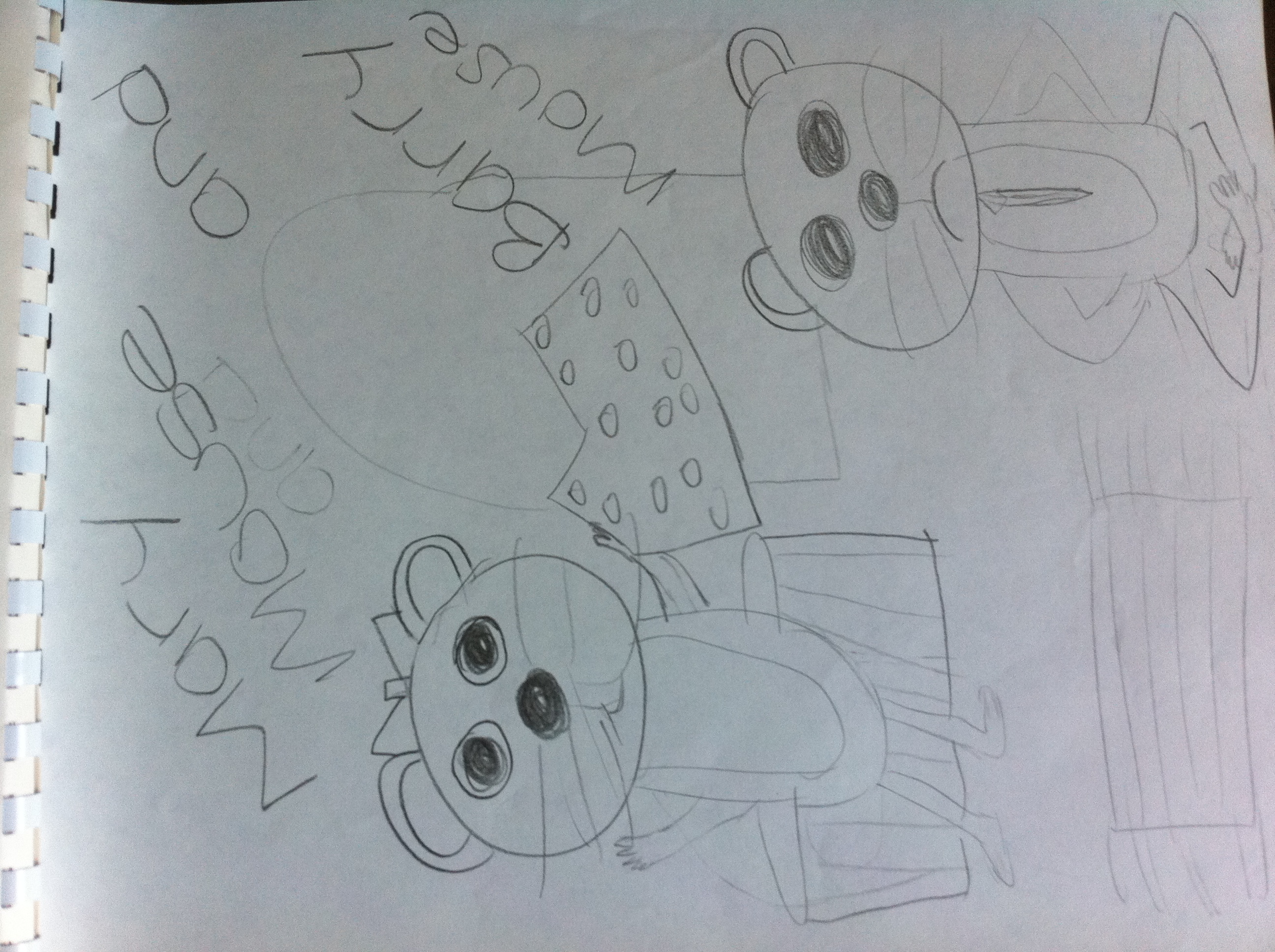
Presenting Barry Mouse and Mary Mouse

A few weeks ago, I visited my parents and stumbled across a short story I wrote in the seventh grade. Behold, “The Mice,” complete with illustration:

One day, two mice, Barry Mouse and Mary Mouse, looked out their home in the wall and saw a great, big piece of cheese.
“That cheese is as good as mine!” Barry Mouse exclaimed. “I have wonderful reflexes, and I’m a natural athlete!”
“Not so fast,” Mary Mouse interjected. “Maybe I could get the cheese before you.”
“Yeah, right,” Barry Mouse said sarcastically. “You’re just a girl! How could you reach it before I? I, the magnificent; I, the strong; I, the superior athlete. That piece of cheese is going to taste so good! It’ll be simply delicious! And why should I share any with you? I’ll get it myself without any help from anybody…”
Mary Mouse was sitting there, eating the piece of cheese she had stolen while Barry Mouse was going on and on about himself. Popping the last piece of cheese into her mouth, she grinned at him, “You were saying?”
Moral 1 – Don’t count your chickens before they’re hatched.
Moral 2 – Never underestimate the power of a female!

I had all the expected reactions after reading this story. I laughed, I sighed, I remembered fondly my childhood days. Then, I showed the story to my stepmom and my sister. As I waited for them to read it, I had another reaction that completely surprised me. A rush of protectiveness washed over me, and I felt fiercely defensive of the little girl who had written this story. One harsh word from the audience, and I would be ready to fight tooth and nail to defend this girl, to shield her from the kind of remark that tears down the spirit before it has the chance to solidify.

This didn’t happen, of course. My mom and sister laughed, and then we all went about our days.

But my reaction stayed with me. And puzzled me. I am not unfamiliar with this all-encompassing need to protect. I have felt it with my sister, who is 12 years younger than me. And now that I’m a mother, this emotion is a part of my daily existence.

But I have never felt it about myself. Why not? I’m not sure. I know I can’t go back in time and protect the 12 year-old girl, but isn’t there a writer inside me who is just as vulnerable, just as needy, just as deserving of my protection? Yet, instead of nurturing her, I have said terrible things to her over the years. Worse, I have believed the detractors who have doubted her dreams.

Would I have accepted these judgments so easily if they had been aimed at my children? Of course not. I would have been spitting mad. While I am slowly exposing them to the realities of life, there are some lessons I hope my children never learn. You can’t do it. You are not talented enough. You are not good enough.

As writers, I think we all struggle to unlearn these lessons, however they came to be taught. I can’t change the past, but I can alter my attitude going forward. The next time I find myself sliding back into these negative refrains, I will think of “The Mice” and remember that I, too, am deserving of my own protection.

Who knew a childhood story could have so much impact? So dig up your old stories and share them with me! I would love to read the words of so much budding talent. I promise, there will only be shared laughter and smiles and not a judgmental word in sight!

Writing Right Where We Are

With laptops at our hands, it’s easy to write almost anywhere. I’m writing this post on my living room couch.  It’s not my favorite spot, but it’s where I am this evening.

Do you have a favorite spot to write?  I’ve had several.  In my first house, I wrote in the back bedroom.  I had a view of the forsythia bush planted against the fence, and loved watching its changes through the year.  My second house had a view of a suburban street, beige walls and very ugly blinds left behind by the prior owner.

I’ve also written in a nice, private study with a view of the front yard and the court where we live now.  I earned my Master’s Degree in that downstairs study.  It was quiet and private, a professional space I shared with my husband without problems. Then my son entered a private high school and that was the end of the study!  Five years later, I’m still wondering what happened.

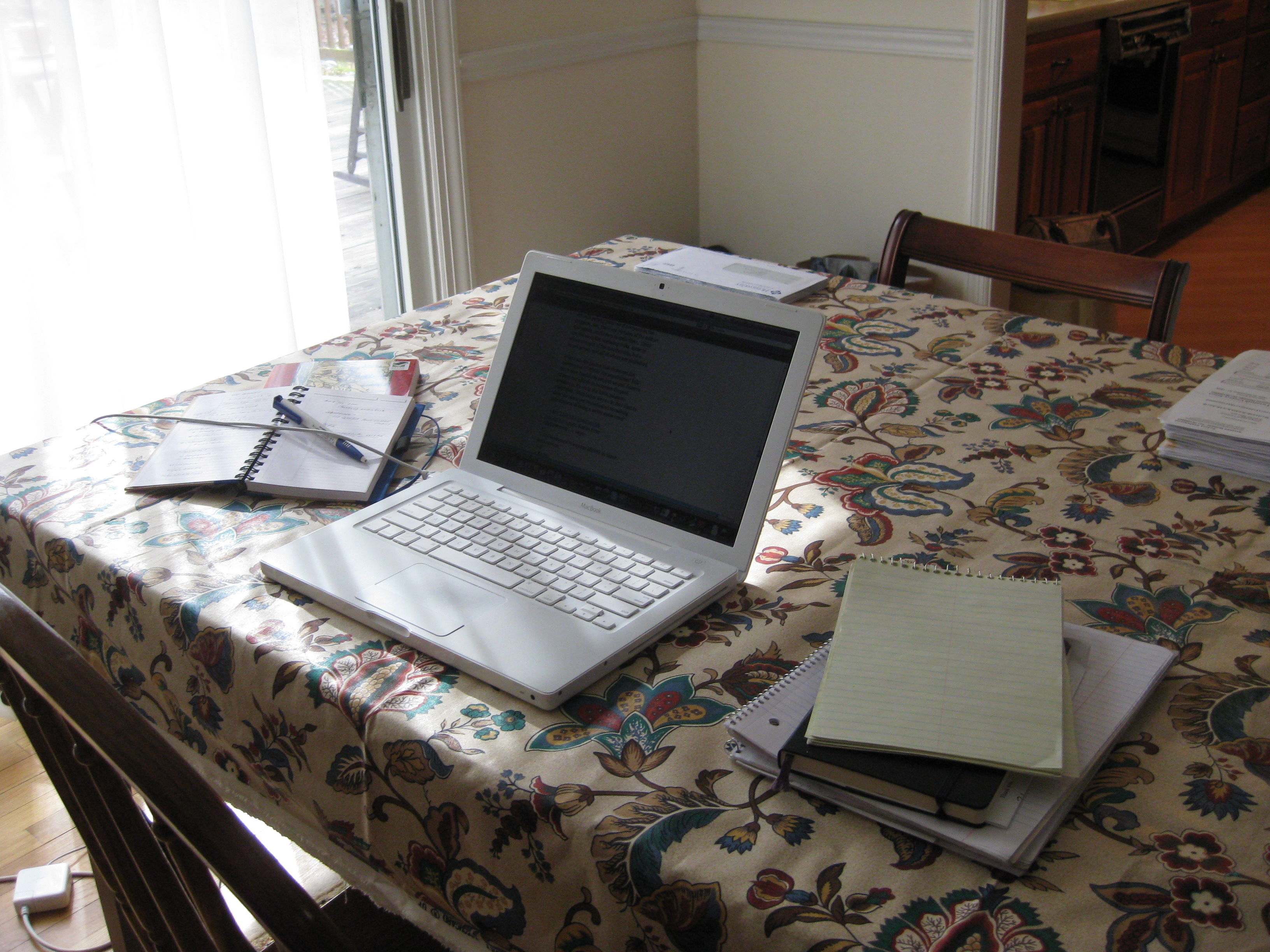
Since re-entering the ranks of fiction writers, I’ve been camping out in the dining room.   Our property is wooded, so I have a view across our deck of squirrels, birds and the flowers I keep on the deck during the summer.  Also deer who love to eat my daylilies (grrr).  I’m close to the coffeepot, the telephone, and (oddly enough) the TV.  There’s plenty of room to spread out my work.  I hope I don’t have guests for Thanksgiving.  Or Christmas.

I’m at the point, though, where I might like to have my own quiet, private place for writing.   Just like I’ve insisted on a sewing room, where the cats couldn’t bother my projects, I could have a writing room.  A writing room, all my own.  One that is close to coffee, phone and TV.  Like my dining room!

Where do you write?  What type of space feeds your creative soul?  Do you need a window?  A view?  Photographs?  A special chair?  Does writing in one particular spot, or with a special talisman nearby, make us feel more like a writer?

Share your thoughts, please.  Perhaps we can gain inspiration on what makes a perfect writing space, just for ourselves.


Operation Real Life Romantic Men

We write and read about them.  They give us goose bumps, make us giggle, confound us and astound us.  Sometimes they take bullets for us and sometimes they just enjoy watching us sleep.  But these are, after all, fictional heroes I talk about.  And at the end of the day, a girl’s gotta know that there are real life great guys out there who are doing their best to live up to these extremely high standards we lady writers have set.  I am extremely pleased to share a few instances of “friends” who have recently had run-ins with some living and breathing romantic men. 

According to one friend, a sweet guy spied her at the local store and worked up the courage to ask what tanning lotion she used so he could get some too since she had such a lovely tan.  And then went on his way.

Another friend reported earlier this month that while standing on the island of a gas station, a man pulled up in his car, rolled down the window and politely said, “I have to admit, I just drove over here so I could see you up close.”  And then he sped away back onto the toll-way. 

And not too long ago, a friend shared that as her handyman was leaving her home after finishing his repair, he kindly said, “I can see why your husband is so in love with you.” And then respectfully left her home.

Some of these guys’ affections may have been misplaced, but I give them credit for trying.   The point is, there are flesh and blood guys out there who are giving it a shot, trying to impress, to be sweet.  

Has your real life honey done something to rival our fictional heroes?  Here is your chance to gush about them on a weekend when we should be celebrating real men. 

And…are you a real life romantic guy who would like to share something nice you’ve done?  It’s your chance to let the female reading public know that you really do exist!  Trust me; we want to hear about it!!

BFF = Brave Fiction Fan

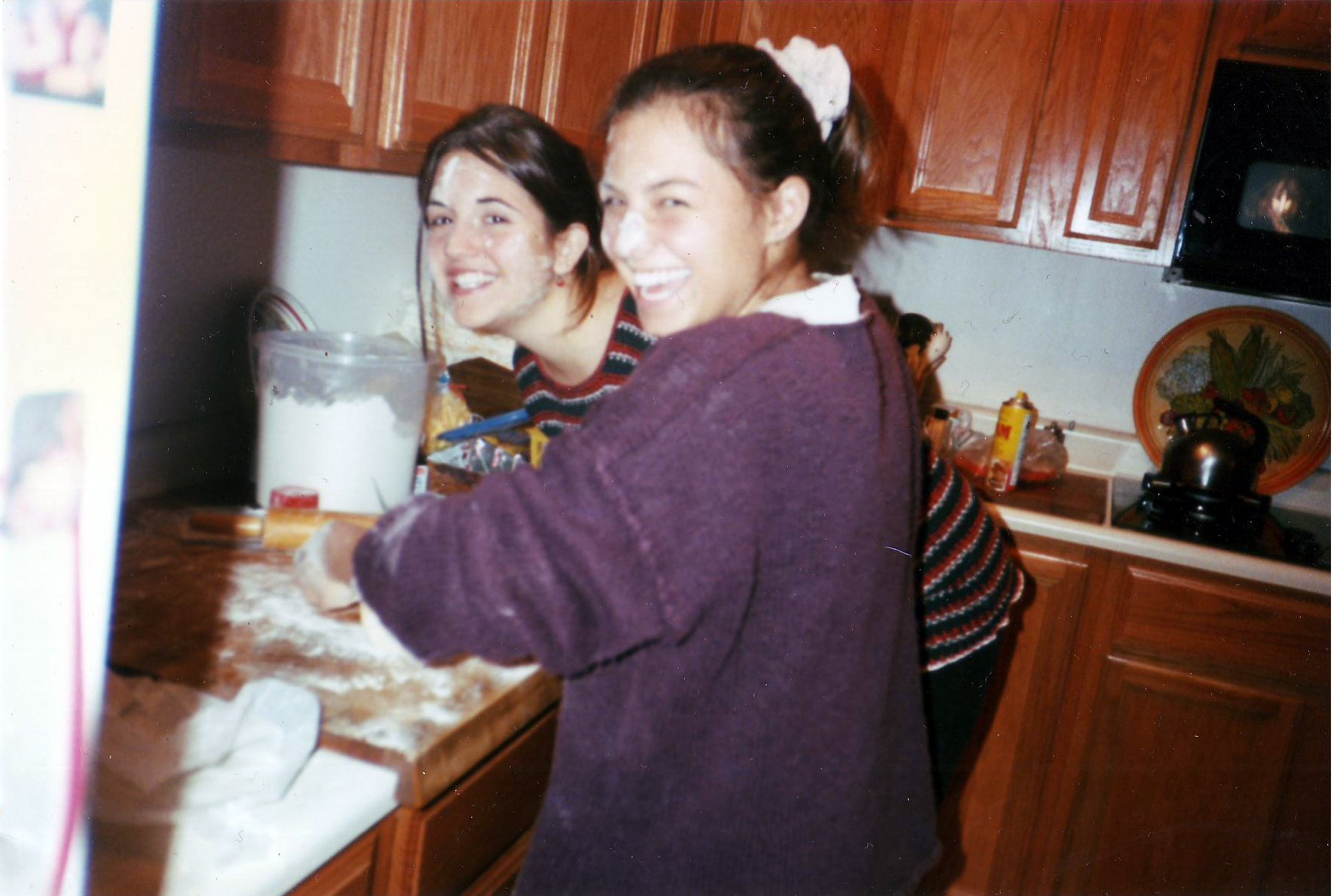
Think it’s hard being a writer? Try being the best friend of a writer! My BFF, Danielle, reads everything I write before anyone else. She is joining the Waterworld Mermaids today to give us her side of the story.

Brief History: D and I have known each other since we were five years old, but we’ve been BFFs for the last 16 years. I live in Arlington, VA, while D is up in Pittsburgh. We have many differences, but we do share the same sensibilities regarding tanning (always wear SPF), Nora Roberts (we heart her), Pittsburgh sports teams (they’re awesome) and the movie Newsies (yay!).

Warning: D and I have a tendency to be silly and go off topic. Enjoy!

Kerri: Do you know we’ve been BFFs for 16 years?
BFF: OMG, we are that old already? Those years have been filled with some crazy times, haven’t they?
Kerri: IKR! When did you start reading romance novels?
BFF: I think it all began when you MADE me read a Nora Roberts trilogy. I think it was the “Born In” trilogy. And if I remember correctly, I had to read it so I would be educated when reading what you would write someday. You are bossy like that.
Kerri: By “bossy” do you mean “talented”?
BFF: Ummm. Sure.
Kerri: What are you reading right now?
BFF: Well, I am reading two books right now and one of them is the final book of the Nora Roberts wedding series, Happily Ever After.
Kerri: Ah Nora!
BFF: I have to admit I did not want to start it as I did not want the story to end. She has a way of having you fall in love with her characters.
Kerri: She’s the best!
BFF: Kinda like someone else I know.
Kerri: Who?
BFF: You know I love your characters but you are not published… YET!
Kerri: What is your favorite thing I ever wrote?
BFF: Ohhh, I love that short story about the girl sitting on the dock with her legs outstretched…what’s the title?
Kerri: I hate that story!
BFF: Shhhhh! I also loved your story set at Christmas and the ideas for your Halloween Story. Now that I think about it, you’ve written a whole lot, haven’t you. And I LOVE everything you have written about Steelers Nation! Black and Gold represent.
Kerri: Go Steelers!
BFF: IKR!
Kerri: We better have football season this year!
BFF: Heinz Field is prepared.
Kerri: How do you stay objective when I ask you to edit my writing?
BFF: It is hard sometimes, but usually I just let myself get into whatever I’m reading. It’s your writing and has your voice, which makes it easy to read. Commenting is comfortable, just like chatting on the phone. Plus, I know you love when I ask you for more details and you won’t get mad at me if I give you advice. Or so I think.
Kerri: You are a fan of “details” in books. [Kerri is rolling her eyes.]
BFF: You have so many great details to share. I can only imagine what it takes to put a whole story together from start to finish. I am here to remind you to describe the weather or the feeling someone has at a certain moment because I want to know as a reader. But readers can be greedy and sometimes books leave us wanting more.
Kerri: How do you feel when I get rejected?
BFF: Like I want to kick the $*!@ out of the person who rejected you!!!
Kerri: Right!
BFF: But really I just want be there to tell you to keep going, take their advice and run with it. I know it is hard to be rejected but don’t let anyone stop you from your dreams. If that one person does not like your book – their loss.
Kerri: When I am rejected or having a bad writing day, I like to send “I suck” to you embedded in song lyrics, a poem or in all caps. Which do you prefer?
BFF: I love the songs! But I HATE when you say you suck. Ooooo it makes me soooo mad. You do not suck! [Kerri imagines D is now rolling her eyes.]
Kerri: Te-he. Do you think I should use a pseudonym when I get published?
BFF: No way, you have an awesome name.
Kerri: Thanks, boo. What do you think I should wear to my first book signing?
BFF: Something with glitter, of course.
Kerri: That’s a given. How do you feel when I base a character, situation or trait on you?
BFF: I think it can be fun. I assume you take some liberties on the details but it can be interesting to see how someone sees you from the outside. I also love the situations because I think back to those times, even if they are tough times to relive. It has to be harder for you to relive tough times though.
Kerri: It has its moments of suck-a-tude.
BFF: Oooo good word!
Kerri: Thanks – I just made that up! What advice do you have for other BFFs of writers?
BFF: I would say, hang on for the ride. It can be a truly fun, and at times, scary rollercoaster. I think anyone who has a friend, family, or loved one in the arts knows that there are high highs and low lows and it is our job and responsibility to be there through it all. And it can be a lot of fun living vicariously through our friends.
Kerri: Okay, time for our final question. What do you want to do when I finally get published?
BFF: Remember when I always said I wanted to be your maid when you were rich and famous? Ha-ha, memories. When you get published I think we should go to the beach or some fun trip. You and I have had some great adventures and who knows it may inspire your next best seller.
Kerri: I think we should go to Kennywood! [Amusement Park in Pittsburgh]
BFF: Fright Nights at Kennywood!
Kerri: Weeeeee! Thank you for joining us today, Danielle.
BFF: WOW! Now I am famous!

#&*$%@$ Day Job!

I know, I know . . .  potty mouth.

But, lately I’ve been very frustrated with the amount of time my day job is taking away from my writing life.  Now, I love my job and it is very fulfilling – I’m an attorney for U.S. Navy and you couldn’t have a better group of clients.  And, this working thing isn’t new. I am not independently wealthy and while my husband is a few years older than I am – he’s no Sugar Daddy. (Although I hear that “the Hef” is now available and apparently has room at the mansion and rockin’ party already planned and paid for)

So, when I began down the path of publication and took this compulsion to write seriously, I always had to work it around the day job.  I write in the evenings after the kids have gone to bed and I can usually get in a good 2-3 hours before my comfortable bed beckons from across the room. And, sometimes I can squeeze in extra time on my regular day off and my lunch hours.  Not bad for a full-time, working mother.

I have excellent time management skills. I juggle my work and the supervision of three others and I fill-in for my boss when he is out.  I’ve done this for years . . .  so, what gives?

Beats me.

Lately work has been crazy and I’ve had a terrible time focusing when I do get a chance to sit down in front of the computer.  Not a good thing when you’re trying to maximize your writing time.

So, I’ve decided to go back to basics and seek some help. Obviously, my life and workload have shifted so I need to re-adjust my time allocation and techniques to maximize my writing time. And, like any good attorney, I went looking for some research tools – some advice from others who have been there and bought the t-shirt.

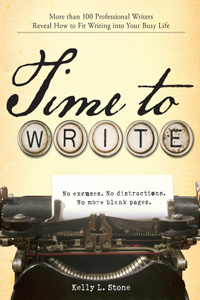
So, I have started reading this:

We’ll see if it helps.  It’s gotta be better than crawling into a fetal position and crying over blank pages.

What do you do to make time to write?  What do you do when life throws you a curveball?

Robin

Be a Money Honey

The last few weeks have been crazy. Everything has centered around my debut novel, Up a Dry Creek, coming out today. Yep, today. If I wasn’t so freaked out I’d be having the time of my life.

However, reality yanked me out of my debut novel euphoria on Friday. There I was typing away when my computer made a sound I hear multiple times a day – a sweet little bing accompanied by a calendar reminder box. June 15: Pay Estimate 2011 Taxes. Ugh. Talk about a buzz kill.

So let’s talk money. More specifically taxes.

First off, know that none of this is meant as professional advice. I am not now nor have I ever been an accountant – trust me, one glance at my checkbook and you’d realize how true that is. However, I’ve learned a few things the hard way that may make paying the piper a little easier for you.

  1. Writing is your passion, your love and your obsession. It’s also your business. Even if your business isn’t a profitable one, you need to keep track of expenses and consult with an accountant or tax software program to take advantage of the deductions available to your small businesses
  2. Keep receipts for everything: how-to books, research, association memberships, continuing education courses, meetings, paper, pens and anything else that has to do with your writing. That rule includes some big ticket items such as laptops and printers, also. You may be able to write off these expenses at the end of the year. I’ve yet to convince my accountant that my gargantuan investment in coffee is a necessary business expense, but if I ever succeed I’ll let you know.
  3. If you have a dedicated space for writing that is used only for that, you may be able to take a home office deduction. It doesn’t matter if it’s an individual room, an alcove or an empty closet (hey, I’ve been there), what’s important is that you use it only for business.
  4. When you are operating a profitable writing business (and may this be all of you), pay your estimated taxes on time and in full – state and federal. Not doing so can mean the difference between going to Disney and having a stay-cation because you drained your vacation fund to pay taxes. That sound you hear? It’s my kids whining.
  5. Get in touch with your inner money honey. You’re a writer, you know how to do research. Turn those skills to the money side of your writing business to discover how you can help to make it a more profitable one.

Money. It’s not something we writers talk about all the time, but we should. After all, as Big Worm says in the movie Friday, “Messing with my money, is like messing with my emotions.” Amen to that.


Love, Comma, Yours Truly

“Know the rules, so you know how to break them properly.”
–Dalai Lama

*

Depending on the time of day and the amount of alcohol involved, writers can go on for hours debating the differences between “voice” and “style.” As a part time copyeditor, it is my job to recognize an author’s style…and then not mess with it (unless it conflicts with house style–just like in poker, the house always wins).

One of the elements unique to each writer’s style is the comma.

Commas are used for lots of reasons. They can be used in lists of one thing, two things, and a third thing. They are used when addressing someone. They are used when interjecting a thought into a middle of a sentence. Most commonly, however, they are used to designate a pause in the rhythm of the text.

Most commas are legal. I feel confident in saying that because there is a comma splice in the Surgeon General’s Warning on the label of every bottle of alcohol produced in the US:

1.) According to the Surgeon General, women should not drink alcoholic beverages during pregnancy because of the risk of birth defects. 2.) Consumption of alcoholic beverages impairs your ability to drive a car or operate machinery, and may cause health problems.

A comma splice is a comma that has no purpose in a sentence. The comma between “machinery” and “and” is really just not necessary. (Though you should have seen the Fairy GodBoyfriend’s face over his Lucky Charms when I asked him to grab me a beer just now.)

It was late when I noticed this particular comma, someone was having a debate–with alcohol, and I was a bored copyeditor. (I double checked it with the English teacher present, just to be sure.) I say that if the Surgeon General is entitled to superfluous commas, then you, too, are welcome to use all the commas you want. If some crazy copyeditor messing with your style wants to take them all out, you have every right to put them all back in.

Before you do, though, I ask you to give it a shot. Leave the comma out for once and see where it goes. Long ago, when I was just a reader, paragraphs with lots of commas sometimes threw me out of the story. But I honestly can’t think of a time I was in the middle of a book and thought, “Wow, that sentence really needed a comma.”

What it comes down to is this: Trust your reader. Trust that your reader is going to know where to put the inflections in sentences and when to pause. You don’t necessarily have to put a comma in front of that “but,” but you can if you really want to. I’m not here to mess with your style. But if you’re open to suggestions, then I’m suggesting it.

I now try to make a subconscious effort to leave out commas when I don’t need them. Despite that, I think my copyeditor still took out about thirty more commas throughout the text of Enchanted. Oh, she put in a few, too, but that’s par for the course…and sometimes that’s house style. I have no problem leaving that up to the house.

Oh, shoot. You must excuse me, everyone. It’s time for me to eat and leave

Resumes and Synopsis . . . So Much Alike!

I will have to say I haven’t had time to get on-line as much as I would like to lately.  Recent situations in my ‘real’ life have interrupted much of my normal routine.  Having had a rough 2010 with my hubby laid-off (he has a solid job again and I thank God every day) and the economy the way it is, we’ve had to accept the fact I can no longer be a stay at home Mom in which we’d both agreed to eighteen years ago when my oldest was an infant.  When my second daughter came along 3 years and eight days after the first, it didn’t make sense to work just to pay for daycare.

Now that the oldest is in college and the youngest is two years away from high school graduation, it’s time for me to beat the streets of the job market.  Years of volunteering and various jobs from home (everything from in home party sales to helping my father-in-law with his insurance company) I’m now trying to figure out where I fit in, while waiting for my books to hit the market someday.  The employment agency is a fount of information for anyone out there but it’s a zoo right now as others have had to re-evaluate the job market from lay-offs, downsizing, etc.

I sat in orientation the other day and listened to one of the career counselors talk about putting together a resume in todays employment arena. Employers on average in the last year or two have hundreds of potential resumes/applications to choose from–they can be choosey.  Listen to some very interesting points:

  • Employers don’t have time to weed through hundreds of resumes a day. (Agents/Editors?)
  • A cover letter explaining who you are and what you have to offer is the first step. (Why gee–that sounds like a Query to me!)
  • In your resume an employer wants you to summarize your skills–designed for the particular job you are applying for–in the first paragraph of your resume. Employers only have time to glance over the first paragraph or two.  If it doesn’t ‘hook’ them right then–they toss it. (Agents/Editors with our Synopsis?)
  • Sell yourself and your skills–don’t go for generic (vanilla) formating.  Wow! your potential employer.
  • Be an extrovert–have business cards made up so you can network and talk about your abilities.  (Hey–isn’t that what we did at retreat and of course Nationals coming up?)
  • When you finally go for the interview–have a pitch ready and ask questions. (Agent/Editor interviews?)
  • Don’t expect to hear back from your employer interview for a few weeks (okay–perhaps months in the writing industry but you get the idea).
  • Keep sending out resumes until you hear something. (Keep sending out Queries/Synposis until you hear something.)

Okay, I guess my point is our writing is a career.  Many of us are PRO members already and we’ve either taken those steps and have the ‘job’ or are still working on those steps and are waiting for an employer/editor to pick us up as the perfect match for their business.  We may start out on the ground floor in an entry level position but as we learn the art of our career we will advance.

The parallels are uncanny. But if we associate one with the other we can get a better understanding of our goals as a writer and how it is a career choice for many of us–even if we have to work at it along with another part-time/full-time job until we can stand on our own financially.

What are your comments?  I would love to hear from you all.